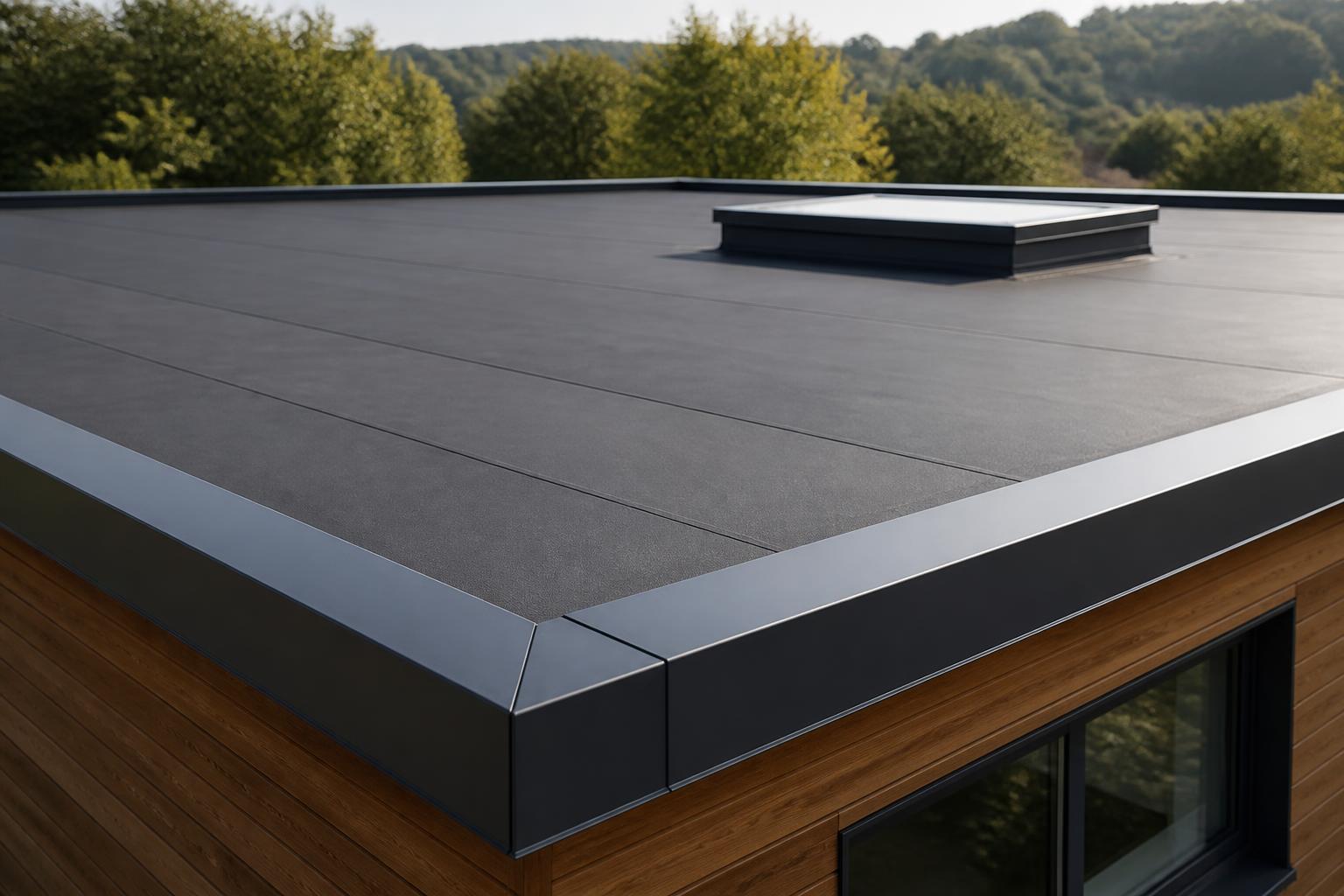
A flat roof that starts to hold water, blister, or show cracking can turn small problems into interior damage fast. If you have stains on ceilings, soft spots near the roof edge, or seams that look worn, the next step is a careful flat roof evaluation before the condition spreads.
Diego's Roofing Corp. helps property owners throughout Costa Mesa, CA address flat roofing problems with clear recommendations for repair, replacement, or inspection. We work with residential, commercial, and HOA properties, and we focus on the details that matter on low-slope systems, including drainage, flashing, membrane condition, and signs of trapped moisture.
Flat roofs can stay serviceable for years, but they also reveal problems through subtle signs. A small seam opening, a low area that holds water after rainfall, or a patch that has started to separate can all point to larger wear beneath the surface.
For Costa Mesa properties, flat roofing attention often starts with one of these warning signs:
When these symptoms appear, a targeted inspection helps identify whether the roof needs a focused repair or a broader replacement plan.
Flat roofing problems are not always visible from the ground. A surface that looks mostly intact can still hide seam failure, membrane wear, or underlying damage at the decking. That is why inspection matters before any work begins.
At Diego's Roofing Corp., we look at the roof as a complete system, not just the visible problem spot. That means checking slope, drainage, flashing details, penetrations, and areas where material has shifted or separated. The goal is to find the source of the issue, not just the symptom.
During a flat roof inspection, we focus on areas that commonly show wear first.
That approach helps homeowners and property managers make a clear decision based on actual roof condition.
Not every flat roof problem calls for full replacement. Many issues can be addressed with a well-planned repair when the surrounding roof still has usable life left. The key is matching the repair to the damage pattern.
Common flat roofing repairs may include sealing openings at seams, correcting flashing failures, replacing damaged sections, or addressing localized wear around roof penetrations. If water has entered the roof assembly, we also look for related decking or wood replacement needs before finishing the repair.
When membrane seams open, water can move under the surface and spread beyond the visible area.
Age, sun exposure, and general wear can cause the roofing material to split or become brittle.
Transitions and roof details often fail before the main roof field does.
Poor drainage lets water sit where it should not, which can shorten roof life and worsen wear.
We explain the condition honestly so you can decide whether a repair is the right path or whether a larger fix makes more sense.
Some flat roofs reach a point where patching no longer makes sense. If the roof has repeated leak points, widespread surface damage, or recurring drainage concerns, replacement may be the more practical long-term option.
Flat roofing replacement is not just about removing old material. It is also a chance to correct the areas that caused trouble before. That may include decking repairs, improved flashing details, or updated waterproofing at vulnerable transitions. Diego's Roofing Corp. handles flat roof replacement with attention to how the roof will perform after the work is complete, not only on installation day.
We can also coordinate related exterior needs such as gutter installation, wood replacement, skylights and solar tubes, or roof washing when those items are part of the project scope.
Flat roofs are not built from one single material, and the right system depends on the building, the roof design, and the existing condition. We work with a range of flat roofing materials and evaluate which option fits the property goals and the current structure.
We also look at related roof details such as waterproofing and decking so the finished surface works as a complete system. The best result comes from pairing the roof material with the right drainage and flashing plan.
A flat roof leak does not always show up where the damage began. Water can travel along framing, insulation, or roof layers before it appears inside. That makes source tracing a major part of solving the problem.
Leak detection on a flat roof starts with the visible signs, then moves toward likely entry points. We look at stains, soft areas, previous patch lines, seams, penetrations, and places where water could collect. If a leak is tied to a roof edge, skylight, or solar tube area, that detail matters just as much as the roof field itself.
This is one reason flat roofing work should be handled by a contractor that understands how low-slope systems move water. The source is often small, but the path it takes can be long.
Homeowners and property managers often want a clear process before any roof work starts. We keep it straightforward so you know what is happening and why.
We listen to the symptoms you have noticed, whether that is a stain, a soft spot, or an area that seems to keep leaking.
We examine the flat roof condition, including the surface, seams, drainage areas, and related details.
We explain whether repair, replacement, or additional evaluation is the better path based on the roof's condition.
We complete the agreed scope with attention to cleanup, communication, and the details that affect roof performance.
That process helps reduce confusion and gives you a practical next step instead of a vague roof opinion.
Flat roofing needs vary depending on the property. A home, a retail building, and an HOA-managed structure may all show different wear patterns, even when the roof type looks similar from the outside.
Diego's Roofing Corp. serves residential, commercial, and HOA properties throughout Costa Mesa, CA and nearby Orange County communities. We understand that flat roofing work often needs to be scheduled and communicated carefully, especially when multiple owners, tenants, or managers are involved.
Whether the roof is part of a single-family home or a larger managed property, the goal remains the same: find the source of the problem, protect the structure, and make the repair or replacement plan easy to understand.
Look for ponding water, stains, cracked material, loose seams, or soft spots. Even small changes can point to wear beneath the surface.
Yes. Water can enter through a seam, flashing point, or penetration and travel before showing up indoors.
Flat roofing depends more on drainage design, seam integrity, and flashing details because water does not shed as quickly as it does on pitched surfaces.
No. Some leaks can be repaired if the surrounding roof still has enough remaining life and the damage is localized.
Yes. Those features can be part of the flat roof evaluation and repair planning when they are tied to the roof area.
Note where you have seen stains, drips, or standing water, and share any history of prior patches or recurring trouble spots.
If your flat roof shows wear, holds water, or has started to leak, a focused inspection is the smartest next move. Diego's Roofing Corp. provides flat roofing services from our Costa Mesa location at 610 Joann St, Costa Mesa, CA 92627, and we offer free quotes for roofing work.
Call +19499033723 to discuss your flat roofing concerns and get a practical plan for repair, replacement, or inspection. Clear communication and steady workmanship make a difference when the roof overhead needs attention.
Start Here
Tell us what you need help with, whether it is a leak, a repair, a full replacement, or a new roofing project. We will review the details and help you move forward with a clear plan.